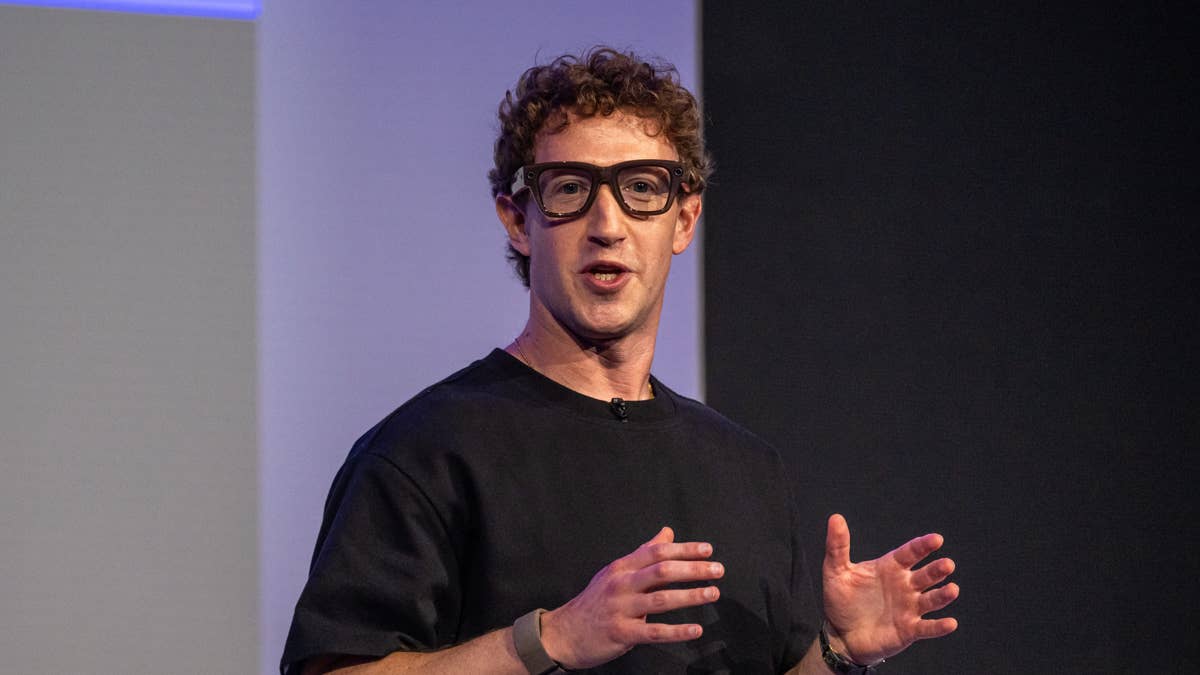
Every earnings season has a moment where a CEO says something that cuts through the noise. Not a guidance range or a revenue beat. Something that reframes how investors are supposed to think about the company. Meta’s Q2 call on July 29 had one of those moments, and it didn’t come from the income statement.
The numbers themselves were rough. Earnings per share dropped 13% year over year to $6.18, missing Wall Street‘s $7.10 consensus by nearly a dollar. Free cash flow fell almost 91% to just $784 million, down from $8.55 billion a year earlier. Capital expenditure hit $31.1 billion in the quarter alone, nearly double what Meta spent in the same period last year. The stock fell roughly 8% to 10% in after-hours trading. The company had already slid 21% since July 15. None of that was new information by the time Zuckerberg opened his mouth on the call.
What Zuckerberg said on that call is what investors who have been selling need to sit with.
What Zuckerberg said about Meta’s AI compute on the earnings call
Meta has been building AI infrastructure at a pace that has alarmed some investors. Capital expenditures hit $31.1 billion in just the second quarter, nearly double what Meta spent in the same quarter a year earlier. The company has guided to $130 billion to $145 billion in full-year 2026 capex, more than double the $72 billion it spent in 2025. The question everyone has been asking is whether any of that spending will ever pay back, according to Fortune.
More Mark Zuckerberg:
- Mark Zuckerberg, Microsoft CEO just made major AI decision
- Zuckerberg’s stock rebound made him world’s 5th richest at $222B
- Mark Zuckerberg backs Elon Musk Silicon Valley decision
On July 29, Zuckerberg gave the clearest answer he has offered yet. “We’re getting a lot of offers for compute at a significant premium over what we paid for it,” he told analysts, according to The Motley Fool. The infrastructure Meta has been building isn’t just sitting there burning money. Other companies are lining up to pay for access to it, at prices above what Meta paid to build it.
That is a different story than the one the stock price has been telling. Meta isn’t just spending on AI because Zuckerberg believes in it philosophically. There is real inbound demand from real companies willing to pay a premium. The question is how quickly that demand translates into actual revenue.
Meta’s cloud ambitions and the Anthropic talks
The most concrete sign of that demand is the reported talks between Meta and Anthropic. The two companies are in early discussions about an arrangement worth as much as $10 billion over two years, structured around Meta renting out AI computing capacity to Anthropic, according to Quartz. Nothing is finalized, and both companies have declined to comment. But the fact that a deal of that size is even being discussed tells you something about the demand for what Meta has built.
Meta has also hired Dave Brown, a former senior Amazon Web Services executive, to help develop its cloud ambitions. That kind of hire doesn’t happen if you’re just testing the waters. It signals that Zuckerberg is serious about turning compute capacity into a business, not just a cost center.
Internally, the effort is already circulating under the name Meta Compute. If the Anthropic deal closes, it would be Meta’s first real step into a market currently dominated by Amazon Web Services, Microsoft Azure, and Google Cloud. The potential is significant. AI infrastructure spending is projected to exceed $1 trillion by 2029, up from $318 billion last year. Some of that will flow to whoever can offer reliable, high-performance compute at competitive prices.
David/Getty Images
Why Meta’s core advertising business still holds the foundation
The spending story is getting most of the attention, but Meta’s advertising business is still performing. Revenue grew 28% year over year to $60.8 billion in Q2. The company has 3.60 billion daily active users across its family of apps, giving it a scale of distribution that almost no other company can match. AI is already improving that core business too, with ranking and recommendation improvements driving measurable gains in ad performance and user engagement.
The EPS miss and the free cash flow drop were both real, but they were partly explained by one-time charges. Strip those out and the underlying business looks meaningfully better than the headline numbers suggest.
The one-time charges that hurt Meta’s Q2 numbers:
- $2.4 billion litigation charge: related to youth safety proceedings and platform liability cases that have been working through the courts. A one-time hit, not a recurring cost.
- $1.18 billion severance charge: tied to the 8,000-person headcount reduction Meta carried out in May 2026. Also one-time. The savings from those cuts will show up in future quarters.
- Higher stock-based compensation: SBC jumped $1.6 billion quarter over quarter, partly tied to AI talent retention. Management noted this is a deliberate investment in keeping the people building the products that will eventually generate the cloud revenue Zuckerberg is describing.
Zuckerberg’s argument to investors is essentially this: the spending is happening, it can’t be undone, but the assets it has created are already attracting premium-priced demand from outside buyers. If the cloud business develops, much of the infrastructure cost is already sunk and the incremental revenue would come at high margins. That’s the bet he is asking investors to hold through the volatility, as TheStreet reported.
What it means for META stock investors right now
The stock fell nearly 8% on July 30 following the earnings release. It has been under pressure for weeks. But the compute demand Zuckerberg described on the call, and the Anthropic talks that followed, are exactly the kind of proof points that could change the narrative if they develop into actual revenue.
Morgan Stanley has been running numbers on what Meta’s AI monetization could eventually be worth. Compute leasing, subscriptions, API access combined could add roughly 25% to future earnings, with API revenue alone contributing about $1.22 per share. These are estimates, not promises. But they suggest the stock at current prices is not pricing in much of that upside at all, which is either a problem or an opportunity depending on whether you believe Zuckerberg’s July 29 call.
The market’s answer right now is skeptical. The stock has been punished for the spending. But Zuckerberg’s message on July 29 was that the spending has already created something people want to buy. Whether investors give him the time to prove that is the question META shareholders are sitting with heading into the second half of 2026.
Related: Mark Zuckerberg, Microsoft CEO just made major AI decision