After years of expansion, one of the world’s most recognizable luxury brands is closing stores and exiting an entire market, as it takes a more selective approach to its retail footprint.
The move comes as luxury companies rethink their store networks amid changing consumer behavior, economic uncertainty, and a greater emphasis on high-performing locations and immersive shopping experiences.
Founded in 1854 in Paris, Louis Vuitton is owned by LVMH, the world’s leading luxury group, with more than 75 prestigious brands across fashion, leather goods, wines and spirits, perfumes and cosmetics, watches and jewelry, and selective retailing. Its portfolio includes Louis Vuitton, Fendi, Givenchy, Christian Dior, Tiffany & Co., and more.
Louis Vuitton exits Guizhou, China
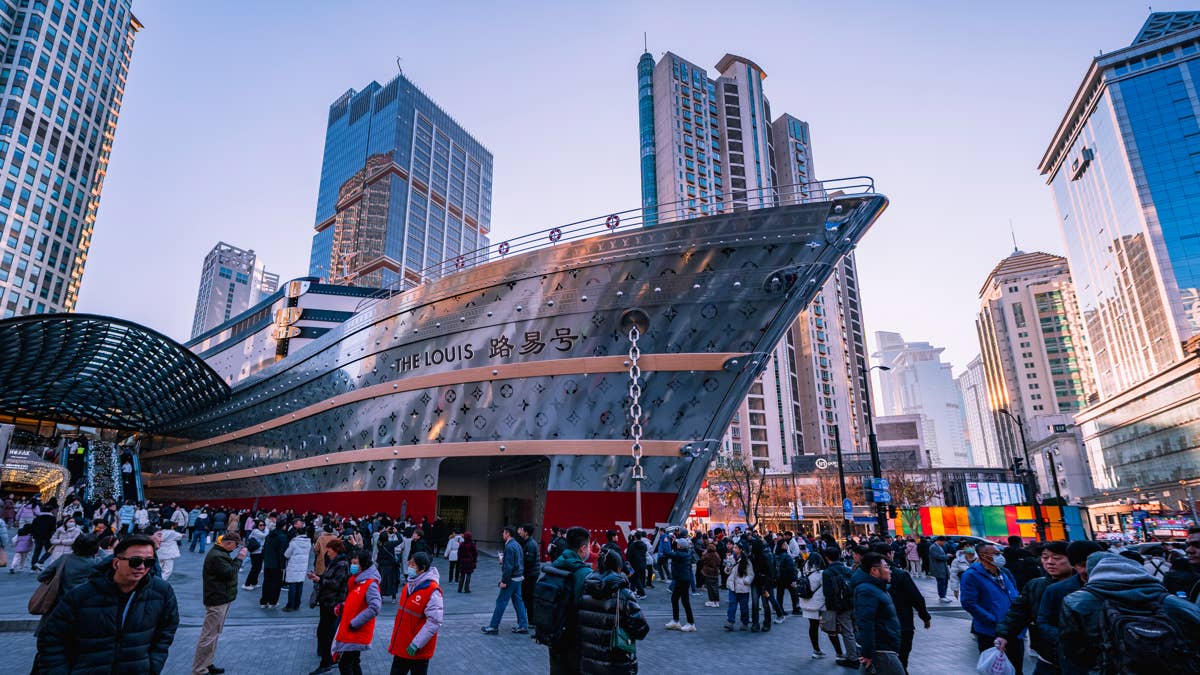
Louis Vuitton is closing its only store in Guizhou, a province in southwest China. The Louis Vuitton Guiyang Jianghua store at Lavant Center is scheduled to cease operations on Aug. 31, 2026, ending the brand’s presence in the province after four years.
The Lavant Center opened in 2022 and became a destination for major luxury brands in Guiyang. Louis Vuitton’s departure follows the exit of other high-end brands from the mall, including Cartier and Gucci.
The closure does not mean Louis Vuitton is leaving China entirely. The brand continues to operate in major markets across the country, including Beijing, Shanghai, Chengdu, and Guangzhou.
Instead, the move reflects a broader effort by luxury companies to reassess where physical stores can generate the strongest returns and where larger, more experiential locations can strengthen relationships with customers.
Louis Vuitton has continued investing in major flagship destinations. LVMH said its new Louis Vuitton locations in Beijing and Seoul have performed strongly, highlighting the group’s focus on distinctive stores and customer experiences.
Why Louis Vuitton is exiting the market
The closure comes as the luxury industry adjusts to a more complex consumer environment.
The global fashion industry is expected to see low-single-digit growth in 2026, according to McKinsey & Company’s State of Fashion 2026 Report, while changing consumer preferences and economic uncertainty continue to reshape the market. McKinsey also expects heightened macroeconomic volatility to drive more value-conscious consumer behavior.
China remains one of the world’s most important luxury markets, but its consumers have become more selective following several years of economic and property-market pressures.
At the same time, the luxury market in China is not moving in only one direction. Some second-tier cities have become increasingly important to luxury brands, with consumers in locations such as Nanjing and Changsha supporting strong luxury sales.
Some of these markets have outperformed traditional first-tier destinations, prompting brands to take a more targeted approach to where they invest, Reuters reported.
That makes Louis Vuitton’s closure in Guizhou notable. Rather than indicating a broad retreat from China, the move appears to be part of a more selective retail strategy in which brands concentrate resources on locations that can support stronger sales, customer engagement, and brand experiences.
The effect of the broader luxury slowdown can also be seen in LVMH’s financial results.
During the first half of 2026, LVMH recorded revenue of €38.6 billion, down 3% from the same period a year earlier on a reported basis, while its Fashion and Leather Goods business posted a 1% decline in organic revenue.
MAGWIN / Getty Images
What this means for the future of Louis Vuitton
LVMH seems to be pursuing a strategy that prioritizes the quality and performance of its retail network rather than simply expanding the number of locations.
The company has emphasized innovation and distinctive in-store experiences as it works to attract and retain customers. Its investments have included major projects for Louis Vuitton and Christian Dior, as well as other properties across the group’s portfolio.
Here’s some of my previous coverage of store closures:
- Famous designer-created retailer closes dozens of locations
- Fashion giant closes another store amid retail shakeup
- 200-year-old retailer shares its fate after shutdown warning
LVMH has cited Louis Vuitton’s new flagship locations in Beijing and Seoul as strong performers, reinforcing the company’s focus on larger and more experiential destinations.
At the same time, LVMH’s overall store count declined by 96 locations year over year to 6,217 as of June 30, 2026. The figure points to continued changes across the group’s extensive retail network, although the company is also investing in new and upgraded locations.
That combination suggests the future of luxury retail may be less about having the largest possible physical footprint and more about targeting the right locations.
For Louis Vuitton, that approach points toward continued investment in flagship stores and experiences in markets where the company sees strong potential while reconsidering locations that no longer fit its strategy.
“We will continue to adjust to evolving consumer expectation with distinctive stores and experience, attention to perceived value, and increased brand desirability and innovations,” LVMH CFO Cécile Cabanis said during the company’s latest earnings call.
The Guizhou closure therefore offers another example of how Louis Vuitton is reshaping where and how it reaches customers as the market changes.
Related: Sportswear giant continues store closures nationwide