Americans are pushing back against massive AI data centers, and it might end up shaping far more than their local energy bills or water use.
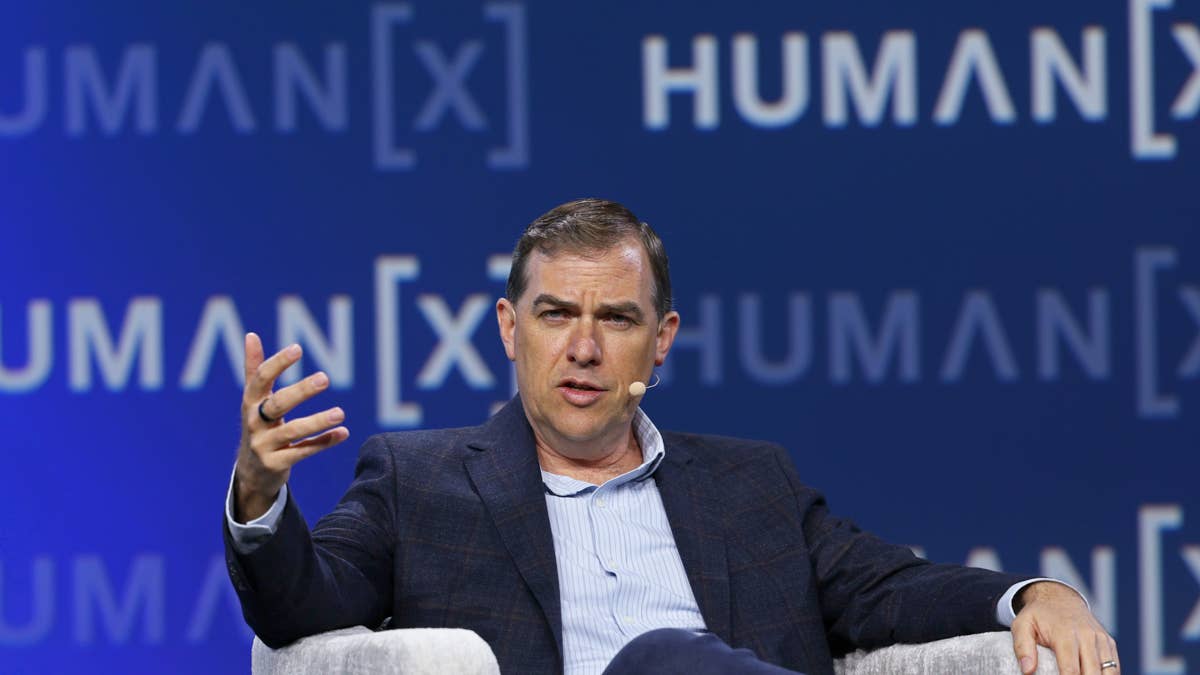
According to a Business Insider report, Amazon (AMZN) AWS CEO Matt Garman is warning of efforts to halt new projects and how that could potentially weaken U.S. economic competitiveness, leaving the country behind in the global AI race, with consequences he says could last for generations.
In his words, “The U.S. could be writing its own losing ticket to this race.”
That, in turn, feeds negatively into AI stocks, which have essentially driven the stock market’s gains over the past two to three years.
Moreover, that warning comes at a point when 100 data-center moratoriums are under consideration nationwide, while the opposition has already delayed or blocked over 120 proposed projects worth $198 billion during the first half of 2026.
Amazon is responding with over $1 billion over five years for education, job training, energy affordability and other programs in communities hosting its facilities, as reported by Reuters.
The conflict exposes a growing trade-off:
America wants the economic benefits of AI, but the infrastructure powering it increasingly competes for local resources. Whether Amazon can ease that resistance may help determine how quickly the next phase of the AI boom gets built.
Amazon is trying to keep the AI buildout politically viable
Perhaps the biggest risk for Amazon is no longer whether demand for AI infrastructure exists. It is more about if communities will continue allowing the company to build enough of it.
More AI:
- Nvidia just made a move Wall Street wasn’t ready for
- Microsoft just took sides in AI policy fight
- OpenAI just disclosed something genuinely alarming
That resistance is already material. More than 120 proposed data-center projects worth roughly $198 billion were delayed or blocked in the first half of 2026, while about 6 in 10 Americans support limiting new data-center construction.
Concerns center on electricity prices, grid upgrades, water use, noise and land impacts.
For Amazon, those objections threaten a core part of its growth strategy. The company invested $276 billion in data centers from 2011 through 2025 and expects about $220 billion in capital spending this year, which includes major technology and infrastructure investments. Slower permitting or broader moratoriums could therefore constrain the physical capacity AWS needs to support AI demand.
Amazon’s response suggests it recognizes that community acceptance has become a business requirement.
AWS is committing over $1 billion over five years to host communities, while promising greater disclosure on energy and water use, an end to certain government nondisclosure agreements, and utility arrangements designed to prevent local customers from absorbing its infrastructure costs.
The company also says it will fund efficiency upgrades for 30,000 homes and 300 public buildings and expand workforce programs.
Those concessions may ease some pressure, but they do not settle the bigger question, which is whether Amazon can expand AI infrastructure without intensifying the very local costs driving the backlash.
Big Event Media / Getty Images
Data center resistance could ripple across the AI trade
The risk extends well beyond Amazon, as the AI investment boom depends on hyperscalers being able to convert enormous capital budgets into actual computing capacity.
Goldman Sachs estimates five major hyperscalers will spend more than $800 billion this year and about $1.1 trillion next year, as reported by Reuters.
That money supports demand not only for cloud infrastructure, but also for chips, servers, networking gear, power equipment, construction and other businesses tied to the AI buildout.
If community opposition or regulation slows new data-center projects, that spending may not disappear, but deployment could be delayed. For companies whose growth forecasts assume continued rapid infrastructure expansion, it matters immensely.
There is another pressure point underneath that risk. Bain estimates AI infrastructure builders would need to generate more than $4.2 trillion in additional revenue within five years to justify the current scale of investment.
The AI boom is still strong, but the bar is getting higher
For now, investors are still rewarding the AI trade.
The Nasdaq is up about 17% this year, the S&P 500 is near a record, Nvidia (NVDA) is back near all-time highs, and Amazon has already joined the $3 trillion market-cap club after strong AWS growth helped reinforce confidence in its AI strategy.
But the market is becoming more selective about what comes next. The median AI-infrastructure stock now trades at roughly 22 times forward earnings, down from 32 times in April, while the broader technology sector has also seen valuation multiples compress.
That suggests investors are no longer willing to rely on spending alone as proof of future returns. They increasingly want evidence that massive AI capital outlays can translate into durable revenue and earnings growth.
Garman’s warning adds another layer to that test. Even if demand for AI remains strong, local opposition could slow the infrastructure needed to support it.
The takeaway is that the AI boom now faces two linked questions: whether companies can build enough capacity and whether that capacity can generate returns fast enough to justify what they are spending.
Related: Jim Cramer spots overlooked AI stock after $11.6 billion deal